



























Rice Husk Suppliers: Powering Sustainability and Industrial Innovation
Behind this movement are rice husk supplier, the critical link between rice production and the industries repurposing this agricultural residue into valuable resources.

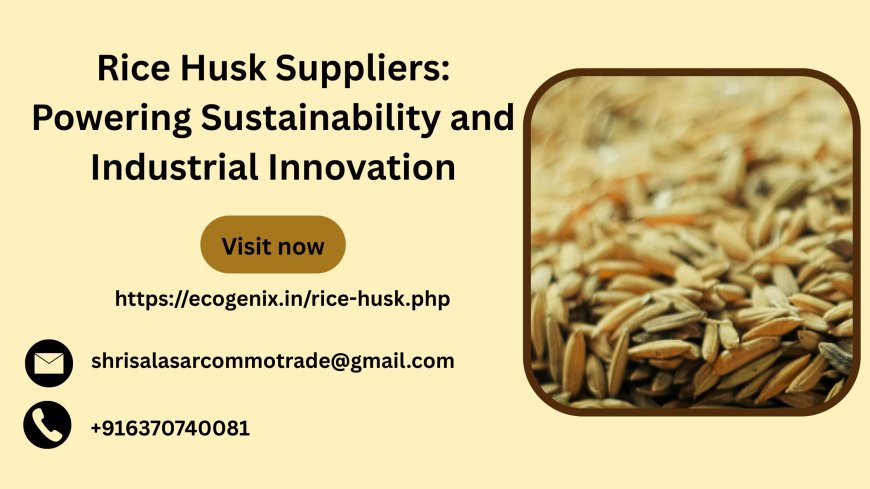
In a world striving to minimize waste and embrace sustainability, rice husk, a once-neglected byproduct of rice milling, is undergoing a global transformation. Once discarded or burned, rice husk is now recognized for its immense potential across industries including agriculture, energy, construction, and manufacturing.
Behind this movement are rice husk supplier, the critical link between rice production and the industries repurposing this agricultural residue into valuable resources. This article explores the vital role of rice husk suppliers, market trends, industrial uses, and how these businesses are redefining what waste truly means.
What Is Rice Husk?
Rice husk (also known as rice hull) is the hard protective layer that covers the rice grain. When rice is milled, about 20% of the total paddy weight becomes husk. With over 750 million tons of rice produced annually, the global rice industry generates around 150 million tons of rice husk every year.
Composition of Rice Husk:
-
Silica: ~1520%
-
Lignin: ~2025%
-
Cellulose & Hemicellulose: ~3540%
-
Moisture Content: Varies based on drying/storage
This unique compositionparticularly the high silica contentmakes rice husk suitable for various industrial applications.
Why Rice Husk Matters Today
The modern industrial economy thrives on efficiency and sustainability. Rice husk fits both ideals:
-
Eco-friendly alternative to wood, fossil fuels, and chemical-based materials.
-
Abundantly available, especially in Asia and Africa.
-
Cost-effective, especially for developing markets.
-
Carbon-neutral fuel, supporting renewable energy goals.
Key Industrial Applications of Rice Husk
Bioenergy & Fuel
Rice husk is a biomass fuel capable of replacing coal, diesel, or wood in thermal energy generation.
-
Uses: Boilers, gasifiers, biomass stoves, and thermal power plants.
-
Energy Value: 30003500 kcal/kg (raw), 35004200 kcal/kg (pelletized)
Rice Husk Ash (RHA)
Burning rice husk produces RHA, which contains 8095% amorphous silica.
-
Uses: Cement additive, refractory bricks, geopolymer concrete, steel industry
-
Advantage: Reduces cement usage, improves concrete durability
Agriculture & Soil Conditioning
Parboiled rice husk is a natural soil amendment:
-
Improves drainage and aeration
-
Increases water retention
-
Acts as a carrier for biofertilizers and nutrients
-
Often used in organic farming and nursery soil mixes
Animal Bedding and Feed Additive
Rice husk is used for:
-
Poultry litter (high absorbency)
-
Cattle bedding
-
Fiber source for ruminant digestion (when ground and treated)
Construction Material
-
Added to lightweight bricks
-
Mixed into insulating panels
-
Reinforces compressed boards and particle boards
Consumer Products
-
Rice husk composite tableware (cups, plates, trays)
-
Toothpaste abrasives (silica from husk ash)
-
Biodegradable packaging
Global Demand for Rice Husk: An Expanding Market
As environmental regulations tighten and carbon neutrality goals spread across nations, the demand for sustainable raw materials like rice husk is surging.
Key Importing Countries:
-
Germany, Netherlands, UK: For construction-grade RHA and animal bedding
-
Japan, South Korea: For bioenergy and bioplastic production
-
Middle East: For animal bedding and biochar
-
USA & Canada: Organic gardening and soil remediation
The global rice husk ash market alone is expected to grow at a CAGR of 5.1% between 20242030.
Role of Rice Husk Suppliers
Rice husk suppliers play a pivotal role in this eco-industrial chain. They dont just provide raw materialthey ensure consistency, quality, and reliability that industries need.
Core Functions of Rice Husk Suppliers:
-
Sourcing: Collaborating with rice mills and aggregators to procure husk.
-
Processing: Cleaning, drying, pelletizing, parboiling, or pulverizing.
-
Testing: Ensuring moisture, ash, and silica levels are within client specs.
-
Packaging & Logistics: Supplying in bulk, bags, or containers.
-
Export Compliance: Handling documentation, phytosanitary checks, and customs.
Example Services:
-
Pelletized husk for boilers
-
Organic-certified husk for soil amendments
-
RHA for construction manufacturers
-
Custom moisture levels and size grading for international buyers
Packaging & Delivery Options
Reliable rice husk suppliers offer:
-
50 kg PP Bags
-
Jumbo Bags (1 MT)
-
Loose Bulk Loading
-
Containerized Export (20-ft or 40-ft containers)
Additional services may include fumigation, moisture control, and shrink-wrapping.
Rice Husk Supplier Certifications
To meet industry and export standards, reputable rice husk suppliers may hold:
-
FSSAI Certification (if used in feed or organic applications)
-
ISO 9001:2015 (for process quality)
-
Phytosanitary Certificate (for plant-based exports)
-
Organic Certifications (NPOP/USDA/EC)
-
REACH Compliance (for EU markets)
Future Trends for Rice Husk Suppliers
Biochar & Carbon Credits: Converting husk to biochar locks in carbon. Suppliers may enter carbon credit markets.
Advanced Composites: Blending rice husk with polymers to create sustainable plastics or tableware.
Decentralized Power Grids: Husk-powered mini-grids in rural areas offer energy access + local jobs.
Circular Agriculture Models: Integrating husk use in vertical farms, aquaponics, and zero-waste farming systems.
Note:- Purchase affordable rice husk ash in India
Conclusion
Rice husk is no longer a waste byproduct; it is a resource of the future. From energy to eco-construction, from agriculture to animal care, its value is evident. Rice husk suppliers sit at the heart of this green revolution, connecting rural abundance with global industrial needs.
If youre an eco-conscious business or manufacturer, now is the time to align with trusted rice husk suppliers who understand your quality requirements and environmental goals. Together, we can turn agricultural waste into wealth and sustainability into business advantage.