



























Comprehensive Guide to Swimming Strokes: Freestyle vs Backstroke
Learn about the key differences between freestyle and backstroke swimming strokes. Explore their techniques, breathing patterns, muscle engagement, and competitive relevance to improve your swimming performance and fitness.

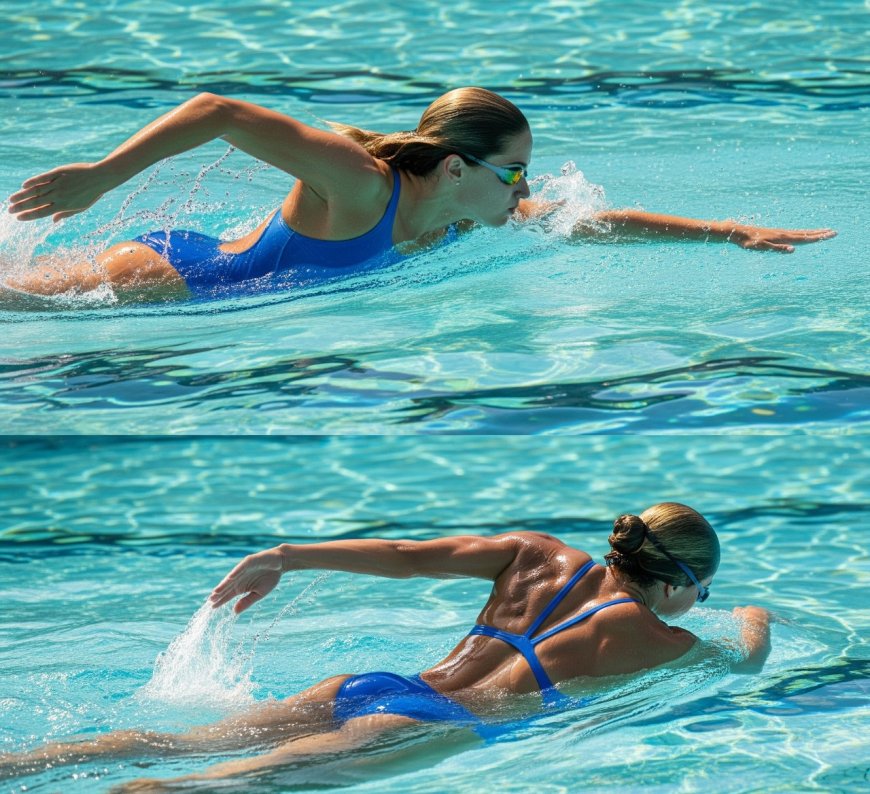
Comprehensive Guide to Swimming Strokes
Freestyle vs Backstroke
Swimming is an athletic sport that requires skill, strength, and grace. It works out your whole body and improves your stamina, cardiovascular health, and muscle strength. It's a low-impact workout that everyone can do, no matter how old or fit they are. This makes it a great choice for anyone who want to stay fit or heal from injuries. Freestyle and backstroke are two of the most important strokes in competitive swimming and general fitness daily tasks. Popular for its speed, efficiency, and ability to give you a high-intensity exercise workout, freestyle is also known as the front crawl. For more swim and safety tips, visit Swim Health & Safety.
Backstroke, on the other hand, is valued for its rhythmic and relaxed motion, often helping swimmers improve posture and flexibility while offering a more meditative experience in the water. Understanding the key differences in their techniques, breathing patterns, muscle engagement, and mental focus can help swimmers maximise their training, prevent overuse injuries, and diversify their skill sets. Whether training for a competition or swimming for leisure, mastering these strokes can add variety and depth to your swimming practice, learn more from Legendary Swimmers.
Freestyle
It is generally agreed that freestyle, which is sometimes called "front crawl," is the fastest and most efficient way to swim. It includes alternating movement of the arms that make a smooth, steady motion, together with flutter kicks that push you forward with a lot of force. To cut down on drag, swimmers keep their bodies horizontal, which makes their movements more streamlined and efficient. This stroke is a favourite among swimmers of all skill levels due to its adaptability, ease of learning, and versatilityit can be used for anything from casual swimming to competitive racing. With proper technique and breathing control, freestyle allows swimmers to cover long distances with minimal fatigue, making it a cornerstone of swimming practice and training..
Technique and Form
Keep your body straight out to the side to reduce drag as you learn freestyle. Consistent flutter kicks and alternating arm strokes push you ahead, and side breathing makes sure you get enough oxygen and save energy. Getting these parts just right makes freestyle a wonderfully smooth and fast stroke.
Speed and Versatility
Freestyle swimmers can cover long distances quickly and with little effort because of their strong arm strokes and rapid, rhythmic leg kicks. The smooth motion of this stroke makes it great for sprinting and long-distance events because it lowers drag in the water. Freestyle is a popular style in triathlons, open-water sports, and competitive swimming because it strikes a good mix between speed, power, and technique. Freestyle is very flexible, so swimmers can change their pace. This makes it a good choice for competitors who want to build endurance or save energy for longer races. Freestyle is the best stroke for swimmers who want to combine strength, speed, and endurance since it is energy-efficient and can be used in many different ways.
Competitiveness
This stroke dominates competitive swimming and is a staple at all levels, from local meets to global championships. Its straightforward technique and high-speed capability make it universally favoured in competitions.
Backstroke
Swimmers can move easily on their backs while doing the backstroke, which combines rest with precise technique. It has a distinctive breathing pattern and smooth pace that make it a great choice for balanced and fun swimming sessions.
Relaxation and Stability
Backstroke gives swimmers a natural edge because it lets them breathe easily while keeping their shape below the water's surface. Coordination of arm pulls and flutter kicks creates a stable and effective stroke by moving the body forward steadily while reducing drag.
Specialized Skills
Although relaxing at first glance, backstroke demands precision to maintain rhythm and direction. Swimmers rely on tactile cues like lane ropes and overhead flags to stay on course. Advanced techniques, such as seamless flip turns, add complexity, making the backstroke a rewarding challenge for competitive swimmers.
Competitive Relevance
Backstroke is the only stroke performed entirely on the back, playing a vital role in individual and medley relay events. Its technical demands on coordination, navigation, and spatial awareness make it a test of skill and accuracy.
Comparing the Two
Both freestyle and backstroke provide full-body workouts but engage different muscle groups and energy dynamics, making them complementary rather than interchangeable.
Energy Efficiency
Freestyle boasts unparalleled efficiency thanks to its streamlined positioning, which minimises water resistance. Backstroke, while slightly less efficient due to higher drag, compensates with a steady rhythm and unrestricted breathing, making it suitable for endurance training.
Breathing Techniques
Freestyle's side-breathing requires precise timing and coordination, which can be challenging for beginners. Backstroke eliminates this complexity by keeping the face above water, allowing swimmers to breathe freely and naturally during workouts.
Muscle Engagement
Freestyle emphasises the chest, shoulders, and core for propulsion and alignment, while backstroke targets the back, lats, and posterior chain, improving posture and balance. Including both strokes in training ensures balanced muscular development and reduces the risk of overtraining specific groups.