



























Common Problems in All Geared Lathe Machines and How to Fix Them!

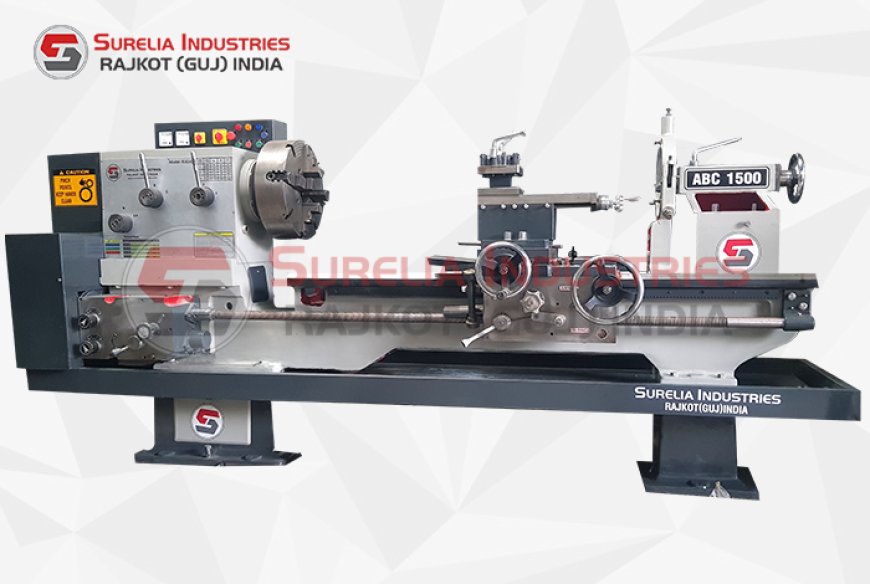
The all geared lathe machine is the most frequent and oldest piece of industrial equipment used to turn, cut, groove, drill, and perform other machine-related activities in a cylindrical shape. Because it is a machine, there may be occasional issues. Many typical lathe machine issues have answers. So if you have a problem, you do not need to purchase a new system. You can get beyond such issues. If we put the difficulties in a list, it will look like this:
-
Metal lathe chattering.
-
Strange vibration on a lathe.
-
Carriage problem
-
Thread Cutting Issues
-
Lathe machine fails.
Today, we'll talk about these issues while dealing with all geared lathe machines. We'll also discuss feasible remedies to help you prevent them in the long term. Let's get started with the major section.
Lathe Machine Chattering
Chattering is the nemesis of all machinists, and you will encounter it sooner or later unless you are a CNC machinist who is familiar with HAAS Automation's SSV process.
However, for normal machinists who use general lathes such as a small-sized lathe or a lathe mill combination, things might get complicated.
To offer a basic explanation to a newcomer, chattering happens when the tool bit snags the metal workpiece while cutting and continues to catch in the same location. As a result, the metal item will have a rough cut surface and a chatter mark. It's like a vehicle tire leaving its imprint on the desert. The sound it produces is a chattering noise.
The golden guideline for stopping chatter is to "reduce the speed and increase the feed." Chatter typically occurs when you are traveling too fast or are not striking it hard enough.
If the golden rule is your first line of defense, you can decrease chatter with a all geared lathe machine. Though certain procedures are bound to be noisy, there are a few things you can always do to win over:
-
Make the stiffness greater.
-
Decrease Tool Pressure
The more solid the machine, the less likely it is to chatter. So go with the heaviest machine you can afford. Examine your manufacturer's descriptions and lubricate them as needed. It is critical to use the right lubrication for the components.
Vibration Problem with All Geared Lathe Machine
Unlike a high-quality wood lathe, vibrations can arise for a variety of reasons. It might be a balance issue. Perhaps the wood is not properly oriented, or the machine may have technical troubles, and so forth. When you dig further into the source of the vibration, you will often find two things:
-
It stems from an imbalance in the lathe linked to the ground.
-
The difficulty lies between the workpiece and the cutting tool.
Follow these five techniques to identify and resolve lathe vibration concerns for good.
-
Use the lathe without adding anything. Have you noticed any vibrations? Then it is really a mechanical issue. Call your manufacturer or seek assistance from a local turning club.
-
The more firm and durable the wood chunk's connection to the faceplate, the less vibration it will cause.
-
Irregular big bowl blanks frequently cause vibrations. Run the lathe and gradually raise the speed in this situation. Check to see where the chunk is rotating smoothly.
-
If your lathe can be more firmly grounded, you can add some weight to it. It will absorb greater movement toward the earth. Although not advised, it is nevertheless effective. Sandbags on the lathe legs or shelf may help to dampen the vibration.
Carriage Problem
Over time, your all geared lathe machine may develop a 'stuck carriage'. The carriage, as well as the handles, must be in great operating order for the machine to move and operate properly. Carriage allows the cutting tools to travel between the headstock and tailstock.
Determine which portion of your computer isn't performing properly. If your cutting tools do not sit in a fixed position, the issue is with your tool post. Similarly, if the cutting tool is fastened but you still feel unsteady, check the compound rest beneath the tool post. Strip down the carriage to ensure that all of the assemblies are in excellent condition. If you discover the nuts loose, tighten them appropriately. Wash off the grease. Check that the surface of the compound rest is flat.
Threads Cutting Problem
The most difficult thing for beginners is starting to cut them. When the knob is turned, the same issue arises: why does this happen, and so on. Before you begin, here are some recommendations to make things easier for you.
Step 1: Setting Up the Lathe for Threading
-
Your compound and toolpost should be clean and steady. Check that first before proceeding with your project. It should be alright if the all geared lathe machine is new.
-
To pick the correct gear to cut the thread, always refer to the handbook provided by the machine maker. Search for the gear table in the book.
-
Then, adjust the threading tool to the diameter of the item to be threaded. This will be your starting depth.
-
The scale should be 0 for both the cross slide and the complex.
Step 2: Begin cutting the thread.
-
If you're working on your first project, start with metal. It will make things a little easier.
-
Run the lathe at a reduced speed and begin cutting a scratch pass. Needless to say, you must first set the position to zero.
-
Stop the machine once the tool reaches the end of the cut. Cut one at a time to avoid harm.
-
After making one scratch pass, double-check the pitch with a thread gauge.
-
To clear the tool, back the carriage away. Run the all geared lathe machine again, but in reverse, to trace the tool back to its starting place.
-
When backing away from the carriage, the tool will not come into contact with the material.
-
Return the carriage to scale zero.
Failure in All Geared Lathe Machine
Failures in lathe machines can cause accidents. Safety is essential while dealing with any machine. Nothing is better than wearing safety goggles to protect your eyes from dust. Your clothes may become entangled in the machine, therefore you must wear appropriate working clothing.
Fix it.
-
Clean the carriage on a regular basis to avoid metal dust buildup. Use a brush to remove metal particles, but keep as much distance as possible.
-
This gap can assist you prevent getting metal particles in direct touch with your skin. These particles might cause scratches and bruising.
Final Words
That concludes some of the frequent all geared lathe machine issues and their solutions. We hope you find this guide useful to your question. If you found this post helpful, please share it with your turning pals. Contact your lathe machine manufacturers if the problem persists.