



























A Comprehensive Guide On the Working Principle of Rapid Mixer Granulator

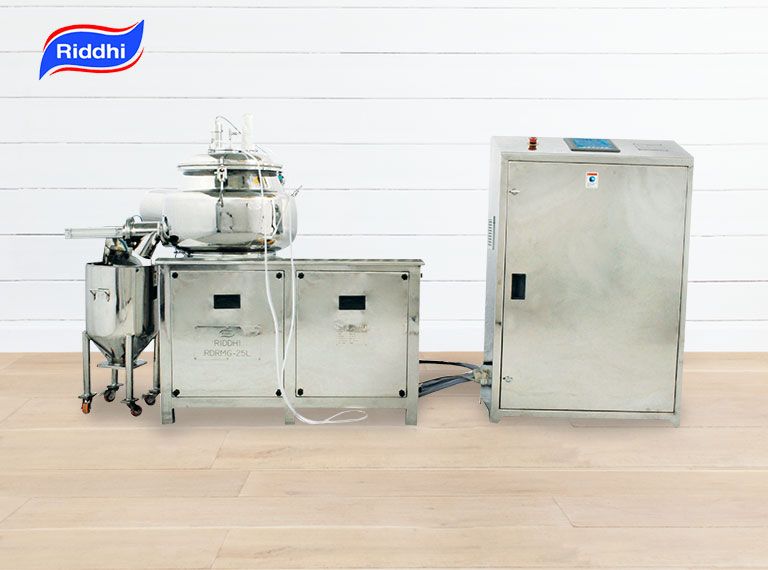
Granulation is an essential step for producing high-quality tablets and capsules in the pharmaceutical industry. Though there are many granulation techniques available, one of the most famous and effective ones is the rapid mixer granulator. It is one of the widely accepted methods in the pharmaceutical industry. It helps in ensuring the consistent granule size and improved flowability. So, in this post, we will understand the working principle of the rapid mixer granulator and what makes it better than the others.
What is a Rapid Mixer Granulator?
This machine is a high-speed mixing device that is widely used in pharmaceutical industries, apart from food, chemical, cosmetic, and herbal industries. It combines the mixing and granulating processes in one unit. The machine prepares the wet granules, which are then dried and compressed into tablets.
Working Principle Of Rapid Mixer Granulator
The working principle of the rapid mixer granulator machine can be described in two steps which are mixing followed by granulation. These steps are carried out in two different but coordinated mechanisms. It is the impeller and the chopper.
-
Mixing Phase:
When starting the process, the dry powders are loaded into the mixing bowl. The impeller rotates at a medium speed for precise and even results. A consistent vigorous circular motion is created, which leads to mixing and breaking of particles into the bowl. The blade runs at a slow yet consistent speed during this phase in order to ensure that there is no premature breakage of the granules.
-
Granulation Phase:
Once the powder is mixed uniformly, the binder liquid is gradually introduced. During this stage, the speed of the impeller is increased in order to ensure intense wetting of the powder granules. The blades cut down the wet granules of consistent shape and size. The combined action of the impeller and the blade ensures that the liquid binder is evenly distributed, resulting in uniform granule formation.
Major Components of the Rapid Mixer Granulator
To deeply understand the granulating machine, it is also essential to understand its various components.
-
Mixing Bowl: It is the component in which the binders are placed & mixed. The bowl is made from stainless steel to maintain durability and hygiene. They are easy to clean and can withstand extreme temperature fluctuations during the operations.
-
Impeller: A high-speed rotation blade rotates the contents in the bowl, creating a uniform wet mass.
-
Chopper: A blade mounted on the same shaft but rotating independently at a higher speed, which breaks the lumps and ensures the smooth granulation process.
-
Drive Motor: It powers and regulates the speed of both the impeller and blade, thus allowing the independent speed control.
-
Binder Addition System: It ensures the controlled addition of the binder during the mixing process.
-
Control Panel: This part of the machine plays a vital role in the operations, for operating speed, mixing time, and binder addition rate, among others.
-
Discharge Valve: It removes the granulated product once the process is completed.
How to Optimize the Granulation Process?
Now you know how a rapid mixer granulator works, there are also some steps that the operators must carefully follow to efficiently handle the granulation process.
-
Impeller & Chopper Speeds: It is responsible for influencing the granule size and distribution.
-
Binder Volume & Addition Rate: It controls the wetting of granules, ensuring that it does not get overwet, impacting the quality of the product.
-
Mixing & Granulation: It impacts the granulation and hardness of the contents.
-
Powder characteristics: Particle size, moisture content, and flowability affect the granule formation.
-
Temperature & Humidity: The environmental factors can also impact the binder evaporation and the consistency of the granules.
Wrapping Up
The rapid mixer granulator is an indispensable tool, playing a very essential part in the manufacturing, combining efficiency and precision. By understanding the working principle, where the impeller mixes the powder and the chopper granulates wetted in a precise manner. When you invest in a reliable and efficient rapid mixer granulator from experienced manufacturers like Riddhi Pharma Machinery Ltd. Their cutting-edge apparatus revolutionizes the manufacturing process. It also enhances the production process, thus making it an essential asset in the pharmaceutical industry. If you, too, want to achieve new heights in the medical industry, then invest in this tablet-making machine.
Frequently Asked Questions:
What is the Concept Behind the Rapid Mixer Granulator?
This machine perfectly combines the process of blending and granulation in a single unit, thus making the entire process efficient and smooth. The further processing of products becomes much easier.
What is the Working Principle of Rapid Mixer Granulator?
This machine works on the principle of mechanical agitation, where the impeller mixes the powder and choppers to break the wet mass into uniform granules once the binder is added. This dual action by the machine ensures perfectly formed granules for further processing.
How Does the Impeller & Chopper Function in the Rapid Mixer Granulator?
These two are the major components of the machine that determine precise output. The impeller provides the axial and radial mixing to uniformly blend it.
The chopper on the other end breaks down the wet lumps into further tiny pieces of granules, ensuring size uniformity.
What Kind of Materials Can a Rapid Mixer Granulator process?
It is a versatile machine that can break down most of the powdered materials, as well as food additives, and nutraceutical blends.
What are the Benefits of Using Rapid Mixer Granulator?
-
Quick and efficient mixing of products
-
Consistent and uniform granule size
-
Scalability from lab to production scale, thus it is a versatile tool.
-
Reduces the processing time
-
Compatible with the automation process.
What are the Factors to Consider While Choosing the Rapid Mixer Granulator?
-
Determine the volume of the material to be processed and the type of formulation.
-
Identify the required granule size, density, and physical properties
-
Choose a reputable manufacturer with a strong track record, so that your investment does not go to waste.
-
Select the machine that is compatible with the kind of products that you will be processing. It will ensure smooth output.