



























What is the Service Life of Perfluoroelastomer FFKM O-Rings and How Often Should You Replace Them?
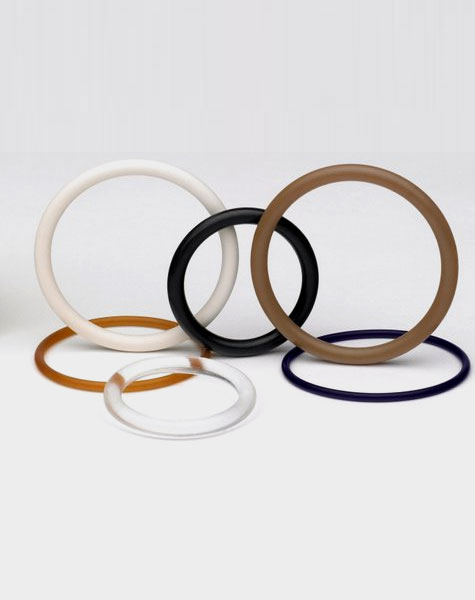
FFKM O-rings are the top choice for sealing solutions. FFKM is a tremendously robust 'O' ring material and our preferred elastomer for producing chemically resistant 'O' rings. Perfluoroelastomer FFKM O-rings are best for a variety of applications. O-rings are suggested for their wide temperature range, chemical resistance, and extended service life. Many users have queries like: How long do Perfluoroelastomer FFKM O-rings last, and when should you replace them? In this article, you will find the answer to this query.
What is the Service Life of Perfluoroelastomer FFKM O-Rings?
We must distinguish between the time a gasket can or should be stored and the time it is used, often known as the passive shelf life and active service life. The service life of O-rings is defined by international aerospace standard SAE AS5316, which sets all storage and service life requirements for elastomer goods.
To ensure that gaskets last as long as possible without losing their intended performance (sealing properties), they must be stored properly, installed carefully, and the conditions to which they are exposed must be known so that replacement or maintenance work can be performed when necessary. The efficiency and longevity of Perfluoroelastomer FFKM O-Rings' sealing action are dependent on their chemical and physical properties.
Tips for good storage
Following a few basic storage rules can help you ensure that your gaskets last a long time.
-
They should be kept at temperatures ranging from 15 to 38 degrees Celsius.
-
The relative humidity should be less than 75 percent.
-
Gaskets should not be exposed to direct sunlight.
-
They should not be exposed to sources of ionizing radiation.
-
They must be free of distortion and stress.
Tips for Perfluoroelastomer FFKM O-Ring Installation
If you construct a gasket poorly, you may generate surface scratches that reduce its sealing performance and cause the mix to age prematurely.
The replacement of any gasket (in bad condition) necessitates the facility's shutdown and, in many cases, extensive maintenance work that must be organized in order to limit the economic impact.
The integrity of a gasket may be affected during the assembly or installation process, hence the following should be taken into consideration:
-
Avoid superficial damage: we propose using lubricants or extending the ring to increase its inner diameter.
-
To avoid twisting the O-ring portion, we propose using Quad-Rings with four support points, which are suitable for hydraulic, pneumatic, and mechanical applications.
-
Depending on whether the installation is radial or axial, we will use a gasket with an inner diameter that is equal to or less than the diameter of the portion being sealed.
Gaskets' service life is unpredictable due to factors such as length of use, friction, temperature, and fluids. However, appropriate installation and monitoring are crucial throughout their operation.
How Often Should You Replace Perfluoroelastomer FFKM O-Rings?
Theres no one-size-fits-all answer, but here are some general guidelines:
Planned Maintenance: In critical applications, FFKM O-rings are often replaced every 13 years as part of a regular maintenance schedule, even if they dont show signs of wear. This helps prevent unexpected failures.
Low-Stress Applications: In less demanding environments, Perfluoroelastomer FFKM O-rings may last 510 years or even longer.
After Exposure to Harsh Conditions: If an O-ring has been exposed to a harsh chemical or very high temperature beyond its rated range, its a good idea to replace it even if it seems fine.
After Equipment Shutdowns: If you're opening up equipment for any reason (cleaning, repairs, inspection), consider replacing the O-rings at the same time. Once disturbed, an old O-ring may not seal properly again.
How to Extend the Life of FFKM O-Rings?
While Perfluoroelastomer FFKM O-rings are built to last, you can take steps to make sure you get the most out of them:
Use the Right Grade: Not all FFKM is the same. Choose a grade that matches your temperature and chemical exposure needs.
Proper Storage: Store O-rings in a cool, dark, dry place away from sunlight, chemicals, or ozone sources.
Clean Surfaces Before Installation: Make sure sealing surfaces are clean, dry, and smooth before installing the O-ring.
Lubrication: Use compatible lubricants to avoid damaging the seal during installation.
Avoid Overstretching: Dont stretch O-rings more than 50% of their original size during installation.
Monitor Equipment Conditions: Keep track of pressure, temperature, and chemical exposure. If conditions become more severe, you may need to shorten the replacement cycle.
Final Thoughts
Perfluoroelastomer FFKM O-rings are among the best sealing materials. Their long service life and superior chemical resistance make them ideal for industries where failure is not an option.
However, no seal lasts forever. Regular inspection and smart maintenance are key to making sure your O-rings dont fail unexpectedly. While many FFKM O-rings can last for years, its better to replace them slightly early than to deal with the consequences of a failed seal.