


























Library Software vs. Manual Systems: Pros and Cons
Library Software vs. Manual Systems: Pros and Cons

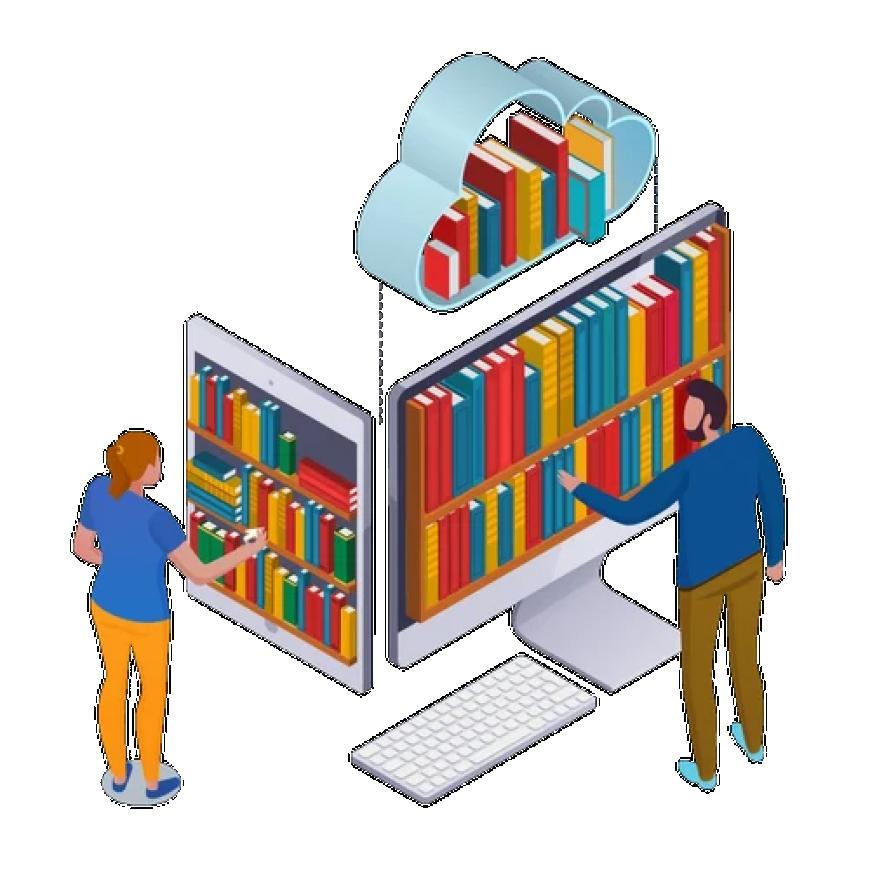
Libraries have long served as centers of knowledge, but how they are managed has changed significantly over time. Traditional manual systemswhich relied on paper-based catalogs, handwritten ledgers, and physical trackingare gradually being replaced by library management software, offering digital and automated solutions.
But which method is better? In this article, we compare Library Software vs. Manual Systems, highlighting their pros and cons to help libraries choose the right solution in 2025 and beyond.
What is Library Software?
Library software, or a Library Management System software (LMS), is a digital tool that automates core library functions such as:
-
Cataloging books
-
Managing user data
-
Tracking book issues and returns
-
Generating reports
-
Sending reminders or alerts
It may be cloud-based, desktop-based, or web-enabled, depending on the institutions needs.
What is a Manual Library System?
A manual library system uses paper records, logbooks, and index cards to manage book inventories and user records. Librarians track borrowing, returns, and overdue items by hand, without digital tools.
Library Software vs. Manual System: A Comparison
|
Feature/Function |
Library Software |
Manual System |
|
Speed and Efficiency |
Very fast and automated |
Time-consuming and slow |
|
Accuracy |
High minimizes human error |
Prone to mistakes and data loss |
|
Search Capability |
Instant search by title, author, ISBN, etc. |
Manual searching through cards or records |
|
User Experience |
User-friendly portals and mobile access |
Dependent on librarians availability |
|
Book Tracking |
Real-time status updates (issued/available) |
Difficult to track in real-time |
|
Fine Calculation |
Automatic fine and due-date management |
Requires manual calculation |
|
Space Requirement |
Digital storage; minimal physical space |
Requires physical storage for records and files |
|
Report Generation |
Automated reports in seconds |
Manually compiled and time-intensive |
|
Remote Access |
Available (web/cloud-based systems) |
Not available |
|
Security |
Secure with role-based access and backups |
High risk of loss, theft, or misplacement |
|
Initial Cost |
Moderate to high (software + setup) |
Low setup cost |
|
Maintenance |
Requires technical support |
Minimal but labor-intensive |
Advantages of Library Software
-
Faster Operations: Tasks like searching, issuing, and returning books are instant.
-
Better User Service: Online access lets users search, reserve, and renew books remotely.
-
Data Accuracy: Reduces errors in entries, fine calculations, and book records.
-
Modern Tools: Integrates with barcodes, RFID, mobile apps, and eBooks.
-
Insightful Reporting: Helps in decision-making with real-time analytics.
-
Scalability: Easily manages growing collections and users.
Disadvantages of Library Software
-
Initial Cost: Buying and setting up the system can be expensive.
-
Training Required: Staff must be trained to use the software properly.
-
Technical Issues: Power failures or system crashes may temporarily affect operations.
-
Internet Dependency (in cloud-based systems): May not work without a stable connection.
Advantages of Manual Systems
-
Low Cost: No need for software, hardware, or IT support.
-
Simple to Use: No training or technical knowledge required.
-
No Electricity Required: Works without dependence on power or internet.
-
Good for Small Libraries: Effective where book volume and users are low.
Disadvantages of Manual Systems
-
Slow and Inefficient: Searching and record-keeping take a lot of time.
-
Error-Prone: Higher chances of missing or incorrect data.
-
Limited Access: Users must visit the library to check availability.
-
Hard to Scale: Not suitable for large libraries or growing collections.
-
Difficult to Analyze: Generating data and reports is time-consuming.
Conclusion: Which is Better?
In 2025, library software clearly offers superior efficiency, accuracy, and user convenience, especially for medium to large libraries or institutions. While manual systems may still serve very small or remote libraries with limited resources, they fall short in meeting the modern expectations of speed, accessibility, and automation.