


























The Pros and Cons of the Internet
"Explore the advantages and disadvantages of the internet, from education & communication to cybercrime & addiction. Learn how it impacts daily life!"

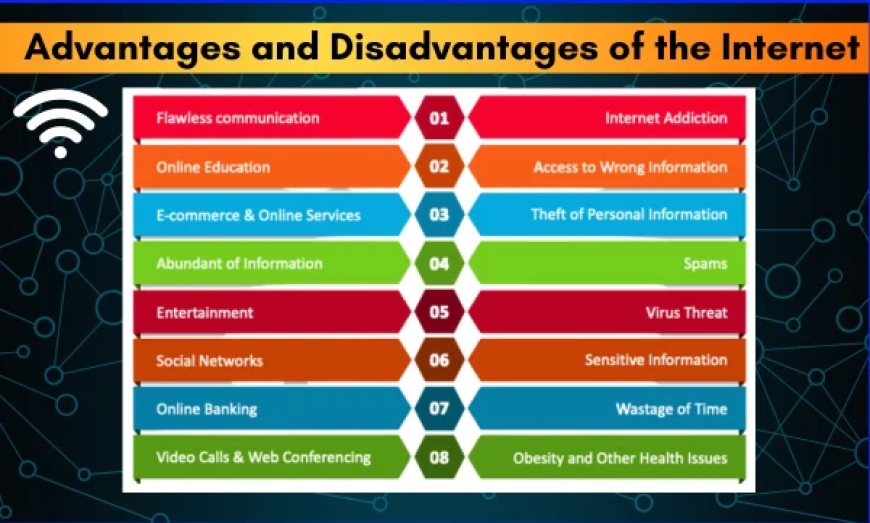
The internet has revolutionized the way we communicate, work, learn, and entertain ourselves. It has become an essential part of modern life, offering countless benefits while also presenting some challenges. Below, we explore the key advantages and disadvantages of the internet.
Advantages of the Internet
1. Easy Access to Information:
The internet is a vast source of knowledge. Search engines like Google, Bing, and Yahoo provide instant answers to almost any question. Students, researchers, and professionals can access books, articles, and tutorials with just a few clicks.
2. Communication and Connectivity:
Social media platforms (Facebook, WhatsApp, Instagram) and email services have made communication faster and easier. People can connect with friends, family, and colleagues across the globe in real time through video calls, messaging, and social networking.
3. Online Education and E-Learning:
The internet has transformed education by providing online courses (Coursera, Udemy, Khan Academy), virtual classrooms, and educational videos. Students can learn at their own pace from anywhere in the world.
4. Convenience in Shopping and Banking:
E-commerce platforms (Amazon, Flipkart, eBay) allow users to shop online without leaving their homes. Online banking and digital payment systems (PayPal, UPI, Google Pay) make financial transactions quick and secure.
5. Entertainment Options:
The internet offers endless entertainment through streaming services (Netflix, YouTube, Spotify), online gaming, and social media. Users can watch movies, listen to music, play games, and follow their favorite celebrities.
6. Work from Home & Business Opportunities:
Many companies now offer remote work options, allowing employees to work from home. Freelancers and entrepreneurs can also find job opportunities on platforms like Upwork, Fiverr, and LinkedIn.
7. Cloud Storage and Data Sharing:
Services like Google Drive, Dropbox, and OneDrive enable users to store and share files securely without physical storage devices.
Disadvantages of the Internet
1. Cybercrime and Security Threats:
Hackers and cybercriminals use the internet for phishing scams, identity theft, and fraud. Viruses, malware, and ransomware attacks can harm personal and business data.
2. Privacy Concerns:
Many websites and apps collect user data for advertising and other purposes. Personal information can be misused if privacy settings are not properly managed.
3. Addiction and Time Wastage:
Excessive use of social media, gaming, and streaming can lead to internet addiction. Many people waste hours scrolling through feeds instead of being productive.
4. Spread of Misinformation (Fake News):
False information spreads quickly on social media, leading to confusion, rumors, and even social unrest. It can be difficult to distinguish between real and fake news.
5. Health Issues:
Prolonged screen time can cause eye strain, poor posture, sleep disorders, and mental health problems like anxiety and depression.
6. Reduced Physical Social Interaction:
Over-reliance on online communication weakens face-to-face relationships. People spend more time on screens than interacting in person, leading to social isolation.
7. Dependence on the Internet:
Many essential services (banking, education, work) now depend on the internet. A poor connection or outage can disrupt daily activities.
Conclusion:
The internet has both positive and negative impacts on society. While it provides convenience, knowledge, and global connectivity, it also brings risks like cyber threats, addiction, and misinformation. Responsible usage, strong cybersecurity measures, and digital literacy can help maximize its benefits while minimizing its drawbacks.